 London Photoshoot
Do You Need a Photography Permit in London?
The honest answer to photography permit london is: usually not, but it depends entirely on which few hundred metres of pavement you are standing on. A photography permit in London is not one document from one office. It is a patchwork of separate rules run by the Home Office, the Royal Parks, the Greater London Authority, Westminster City Council, the City of London Corporation, individual boroughs, and the private owners of specific bridges, markets and viewing platforms, each with its own fee, its own notice period and its own definition of what counts as commercial. This page sets out what each of those bodies actually publishes, checked 25 August 2026, and names the two places where their own rules contradict each other.
Quick answer
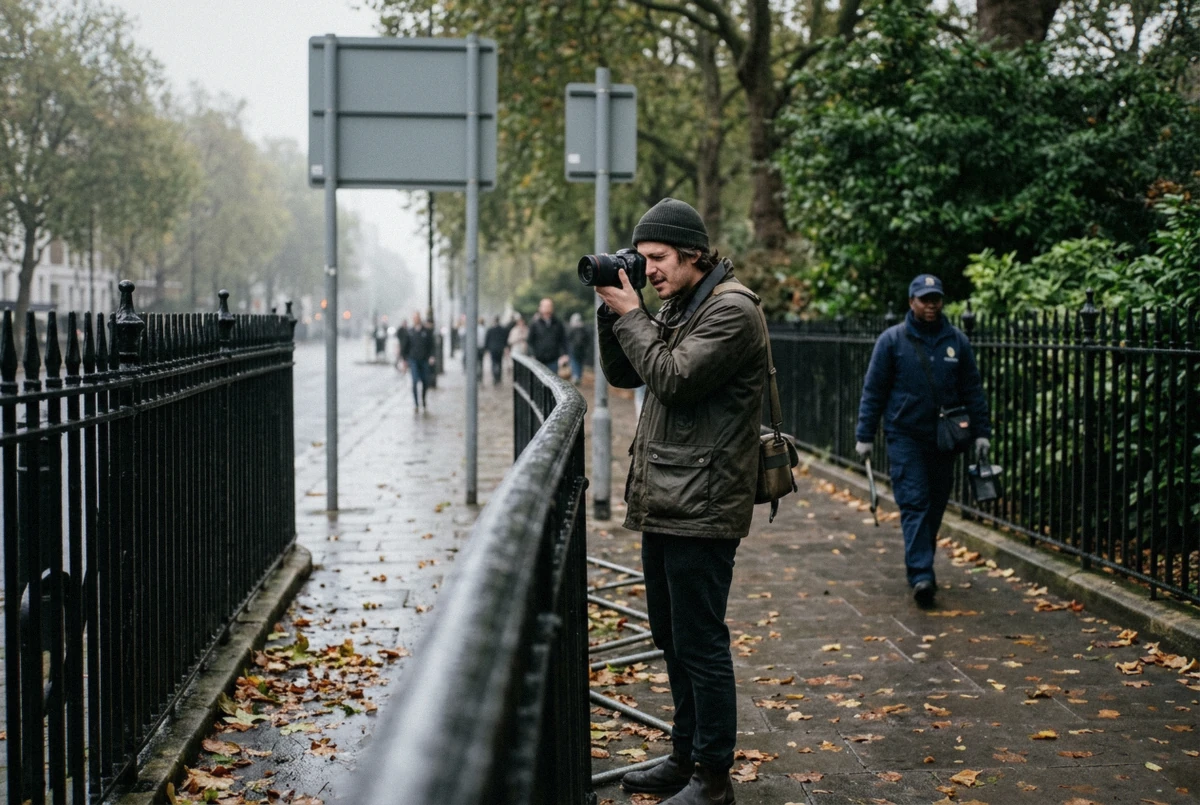
For a personal or portrait photoshoot on an ordinary London pavement, no permit exists to buy and none is needed: the Home Office's own stop and search code of practice (18 July 2022) states that the public and the media need no permit to film or photograph in public places, and that police have no power to delete your images. The rules tighten the moment you step onto land with a private or statutory owner: the Royal Parks charge £100 + VAT for a one-hour portrait permit, Trafalgar and Parliament Square carry a byelaw aimed at commercial photography, and the City of London requires an application on its own property (Tower Bridge, Millennium Bridge, Leadenhall Market) regardless of how many people are in your crew. The location-by-location table below has every fee and notice period; the decision table tells you in one line whether any of it applies to your booking.
Key takeaways
- Pavement and street photography needs no permit anywhere in London, confirmed by the Home Office code of practice
- The Royal Parks, Trafalgar Square and the City of London all charge separately for portrait or commercial work, see who owns what, and what it costs
- Westminster and RBKC both publish tripod rules that contradict their own other pages, read the two unresolved contradictions before you assume either way
- Every marketplace session on this site London photoshoot sessions that already route around the permit-heavy spots. Westminster's open pavements are exactly where ten of the twelve sessions shoot
The Baseline: Pavement Photography Needs No Permit
Start with what is actually settled. The Home Office's stop and search code of practice, published 18 July 2022, states plainly that members of the public and the media do not need a permit to film or photograph incidents, and that police officers have no power to delete or destroy photographs or footage taken in public places. That is a national policing document, not a local council rule, and it sets the floor everywhere in London: a photographer and a client walking a public pavement, taking handheld portrait photos, are not doing anything that requires anyone's permission.
Film London, the capital's own film office, describes the underlying right in the same terms for filming: on the public highway, working handheld and without obstructing anyone, needs no licence at all. The one statutory limit that does exist is the Highways Act 1980, section 137, which makes it an offence to wilfully obstruct free passage along a highway, not a photography-specific rule, but the reason a photographer plants a tripod for thirty seconds and moves rather than blocking a pavement for an hour.
None of that changes once you step off a public pavement onto land someone else owns or manages. That is where every rule below actually starts.
The Royal Parks: Portrait Work Needs a Paid Permit
The Royal Parks (Hyde Park, Kensington Gardens, Regent's Park, St James's Park, Greenwich Park, Richmond Park, Bushy Park) are the clearest exception to the pavement rule, because they say so themselves: "any filming, photography or audio recording that takes place in parks requires permission" and, in most cases, a fee. Their permit-free carve-out is narrow and specific: personal use is defined as images "captured on small handheld devices such as mobile phones", which by the Royal Parks' own wording excludes a dedicated camera used for a paid portrait session.
For the kind of session this site tracks, engagement photos, family portraits, couple shoots, the relevant product is the Royal Parks' Wedding & Lifestyle permit. It explicitly covers "engagement, wedding and civil partnership photography, individual and family portraits" and costs £100 + VAT (£120 total) for one photographer, strictly one hour, a maximum of ten people, with £5 million public liability insurance required and a minimum of ten working days' notice before the shoot. Regent's Park runs its own separate online application rather than the shared portal the other parks use.
For anything beyond a portrait session, the Royal Parks' commercial rate card, updated January 2026, prices "other filming, photography and sound recording" (the category that explicitly includes portfolio shoots) at £340 + VAT for one to five people, up to four hours, in Zone A parks (St James's, Green Park, Hyde Park, Kensington Gardens, Regent's Park, Primrose Hill), or £250 + VAT for the same terms in Zone B parks (Greenwich, Richmond, Bushy). One thing worth flagging plainly: the Royal Parks publish no tripod rule at all across any of this documentation. Anyone repeating a Royal Parks tripod ban online is not quoting the parks' own published rules.
Trafalgar Square and Parliament Square: a Byelaw That Targets Business Use
Trafalgar Square and Parliament Square sit under Greater London Authority byelaws rather than a borough's rules. Byelaw 5(1)(p) bans photography "for the purpose of or in connection with a business, trade, profession or employment" without written permission from the Mayor of London. Commercial applications cost £1,000 + VAT per hour for exclusive use of the square, require £5 million public liability insurance, and need 14 working days' notice.
The GLA's own Pre-Authorisation Scheme document (Issue 2.1, March 2012), the same document that sets out the byelaw, also states that the byelaws "place no restrictions on private or amateur photography" and instructs wardens to ask about your purpose and let you continue if you are not shooting commercially. Those two statements sit in the same document and are not fully reconciled; the contradictions section below sets out exactly where that leaves a paid marketplace photoshoot.
One more distinction worth knowing: the GLA controls the square itself, but Westminster City Council, not the GLA, controls the North Terrace outside the National Gallery, so a shoot that moves from the square onto that terrace has crossed into a different rulebook entirely.
Westminster: No Application for Small Crews, but No Tripods
Westminster City Council's filming and photography guidance, last updated 11 May 2026, is the rule most relevant to this site's sessions, because most of them shoot Westminster pavements. No application is needed if all of the following hold: the on-street team is five people or fewer, the equipment is handheld only (the council states explicitly "no tripods, drones, jibs, lights/monitors on stands"), at least two metres of clear pavement is left for pedestrians, the shoot stays on the pavement rather than the road, and the location is not a Red Route (Park Lane, Victoria Embankment, Marylebone Road among others) or Royal Parks land (The Mall, Birdcage Walk, Constitution Hill).
Westminster states plainly that other London boroughs allow tripods on their pavements and Westminster does not, an explicit, self-aware exception rather than an oversight. If a shoot does need a tripod, Westminster's basic filming application processes in three working days.
This is the rule almost every session on the homepage's catalogue is built around without saying so: the Big Ben hour, the landmarks walk and the video-clip session are all handheld, small-group bookings on Westminster pavements, inside the no-application threshold by construction, not by luck.
The City of London: an Application Regardless of Crew Size
The City of London Corporation's rules, updated 6 July 2026, work differently from Westminster's headcount threshold. A Notice of No Objection covers small, portable street shoots on ordinary City streets. But any filming or photography on City Corporation property needs an application "regardless of crew size", and that property list includes Tower Bridge, Millennium Bridge, London Bridge, Southwark Bridge, Blackfriars Bridge, the City's gardens, and Leadenhall and Smithfield Markets. A single photographer and one client on Tower Bridge is, on paper, in the same application category as a full film crew.
The City's published street fees (16 June 2026, plus VAT) are tiered: £40 for charity or student shoots, £95 for a small crew shooting handheld with up to five people, and £210 for a crew using a camera and tripod with up to ten people. Its gardens carry a separate note worth reading exactly as published: "visitors to our open spaces are welcome to take photos… there is no need [to] ask permission" for casual visitor photos, but an organised photoshoot needs a licence, and the City's own wedding and lifestyle category, "including engagement, wedding, civil partnerships, other celebrations and portraits and stills", costs £294 for up to two hours, between 08:00 and 18:00.
Millennium Bridge has its own fee structure layered on top: the first 30 minutes are covered by the base application fee, a shoot up to two hours costs £300, and up to four hours costs £500.
Kensington and Chelsea (Notting Hill): Fees, and a Published Contradiction
The Royal Borough of Kensington and Chelsea's film fees document (2024–25) requires a Notice of No Objection above five people and/or when non-handheld equipment is used. A small crew shoot costs £94; Portobello Road carries an extra fee priced on application; and a stills shoot of no more than two people qualifies for a 50 percent concession with a £37.50 minimum. Any shoot in one of the borough's parks needs an application "regardless of cast and crew size, including all wedding/engagement shoots", RBKC draws no small-crew exemption for parks the way it does for streets.
RBKC's own documentation is not internally consistent on tripods: the fees PDF and the borough's FilmFixer application page state the rule differently from each other, and this page is not going to guess which one governs in practice; treat a tripod on an RBKC street as something to clear with the council directly rather than assume either page settles it.
One more thing worth being precise about: RBKC publishes no rule at all, permit or otherwise, about photographing the exteriors of Notting Hill's pastel houses from the public pavement. What stops a photographer from posing clients on someone's front steps is etiquette, not law: those houses are private homes, and the Notting Hill session on this site shoots from the pavement for exactly that reason, not because a council rule requires it.
Specific Venues: Tower Bridge, Sky Garden, Borough Market, Covent Garden, the Underground
Beyond the borough and park rules above, several named locations run their own equipment and permission rules that sit on top of everything else.
Tower Bridge bans tripods inside the attraction itself, states that photographing the bridge from public space needs no permission from the bridge's owner, and bans drones within 50 metres. Sky Garden permits personal photography inside but bans tripods, flash and other specialist equipment, and separately bans selfie sticks, tripods and umbrellas on its open-air terrace. Borough Market allows personal photography but bans long lenses and tripods outright, and its rules count multiple lenses or a camera bag as "professional-grade equipment" that needs written permission in advance; commercial requests need 14 days' notice.
Covent Garden, run by Shaftesbury Capital, requires emailed permission and £10 million public liability insurance for any shoot, and its own published wording consistently uses the word "film", never "photography", which leaves a genuine gap in what the document actually covers for a stills-only session; treat it as covered by the same permission requirement rather than assuming the silence on stills means no permission is needed.
On the Underground, TfL allows private photography through a station at the station's own discretion, "as long as additional camera equipment (including flash and tripods) is not used", and tripods are never allowed on platforms or near escalators regardless of discretion. Commercial filming on the network starts from £1,095 an hour, needs 15 working days' notice and £10 million insurance, and TfL publishes no student or charity discount rate.
Location by Location: Who Owns It, What a Paid Portrait Session Needs, the Fee
| Location | Who owns/controls it | What a paid portrait shoot needs | Fee | Notice |
|---|---|---|---|---|
| Ordinary pavement, anywhere in London | Public highway | Nothing, Home Office code confirms no permit needed | None | None |
| Hyde Park, Kensington Gardens, Regent's, St James's | The Royal Parks | Wedding & Lifestyle permit for portraits | £100 + VAT (£120), 1 hr, up to 10 people | 10 working days |
| Greenwich, Richmond, Bushy Park | The Royal Parks (Zone B) | Portfolio/other filming permit | £250 + VAT, up to 4 hrs | Not separately stated |
| Trafalgar / Parliament Square | GLA (Mayor of London) | Written permission if commercial | £1,000 + VAT/hr | 14 working days |
| Westminster streets, ≤5 people, handheld | Westminster City Council | No application | None | None |
| Westminster streets, with tripod | Westminster City Council | Basic filming application | Not stated on the guidance page | 3 working days |
| Tower Bridge, Millennium Bridge, Leadenhall Market | City of London Corporation | Application, regardless of crew size | £95 (small crew) to £500 (Millennium Bridge, 4 hrs) | Not uniformly stated |
| City of London gardens, portrait/wedding shoot | City of London Corporation | Licence | £294, up to 2 hrs, 08:00–18:00 | Not separately stated |
| Notting Hill streets, ≤5 people, handheld | RBKC | No Notice of No Objection | None | None |
| RBKC parks, any size | RBKC | Application, regardless of size | From £94 | On application |
| Covent Garden | Shaftesbury Capital | Emailed permission + £10m insurance | Not published | Not stated |
| London Underground station | TfL | None for private, discretionary handheld | N/A for private; commercial from £1,095/hr | 15 working days (commercial) |
Drones: Central London Is Effectively Off-Limits
The UK Civil Aviation Authority's Drone Code (March 2026) requires a Flyer ID from 100 grams of drone weight, not the 250 grams figure that circulates in a lot of general guidance, meaning almost any drone capable of taking usable photographs needs one. An Operator ID costs £12.34 a year, and Remote ID broadcast became mandatory from 1 January 2026 for drones in the UK1 to UK3 operational classes.
None of that matters much in central London because the airspace itself is closed. Three restricted areas (EGR157 over Hyde Park, EGR158 over the City of London, and EGR159 over the Isle of Dogs) run from the surface up to 1,400 feet, well above the standard 120-metre legal ceiling for drone flight. In practice, that makes central London off-limits to drone photography regardless of registration status, and the rule against flying over crowds applies everywhere else in the city no matter how light the drone is.
Drone Rules at a Glance
| Requirement | Threshold | Source |
|---|---|---|
| Flyer ID needed | From 100g drone weight | CAA Drone Code, March 2026 |
| Operator ID | £12.34 a year | CAA Drone Code, March 2026 |
| Remote ID broadcast | Mandatory from 1 January 2026, UK1–UK3 classes | CAA Drone Code, March 2026 |
| Legal flight ceiling | 120 metres | CAA Drone Code, March 2026 |
| Restricted airspace floor over Hyde Park, the City, Isle of Dogs | Surface to 1,400 feet | EGR157 / EGR158 / EGR159 |
Two Contradictions Worth Knowing About, Honestly
Two of the rules above do not fully agree with themselves, and the honest answer is to name both readings rather than pick one and present it as settled.
The first is Trafalgar and Parliament Square's own governing document. GLA byelaw 5(1)(p) bans photography "for the purpose of or in connection with a business, trade, profession or employment" without written permission. The same Pre-Authorisation Scheme document that quotes that byelaw also states the byelaws "place no restrictions on private or amateur photography" and tells wardens to ask about purpose and let non-commercial photographers continue. A paid marketplace portrait session sits in an ambiguous middle: the client's photos are not being sold or published for the photographer's business in the way the byelaw's language seems aimed at, but the photographer is plainly working professionally. The document itself, dated March 2012, does not resolve which limb governs a paid personal portrait session. In practice, wardens make the call on the day based on what they observe, and a small handheld session doing what looks like personal photography is treated the way the "no restrictions on private or amateur photography" line describes.
The second is RBKC's tripod rule. The borough's fees PDF and its FilmFixer online application page state the tripod requirement differently from each other, and nothing in either published source explains which one is the current, authoritative version. This page is not going to guess. If a tripod matters to your shoot in Kensington and Chelsea, the only reliable answer is asking the council directly rather than trusting either page in isolation.
Does This Apply to You?
If you're one photographer and a client, handheld, on an ordinary pavement
no permit needed anywhere in London, this covers most of the sessions on this site
If your shoot is a portrait or engagement session inside a Royal Park
book the Wedding & Lifestyle permit: £100 + VAT, one hour, up to 10 people, 10 working days' notice
If you want to shoot Trafalgar Square or Parliament Square with a small handheld setup, non-commercially
you're within the byelaw's own 'no restrictions on private or amateur photography' line, though a warden may still ask what you're doing
If you're on a Westminster pavement with five people or fewer and no tripod
no application needed, this is the rule the Big Ben session and most Westminster listings work inside
If your shoot is on Tower Bridge, Millennium Bridge, or in a City of London garden
an application is required regardless of your crew size, check the City's fee for that specific location
If you want a tripod on the street in Kensington and Chelsea, including Notting Hill
ask the council directly, its own published pages disagree with each other
If you're considering a drone anywhere near central London
assume you can't fly it: Hyde Park, the City and the Isle of Dogs sit under restricted airspace up to 1,400 feet
London Photography Permits: Common Questions
Do I need a permit to film in London?
For handheld, non-obstructive filming or photography on a public pavement, no. Film London describes the underlying right this way, and the Home Office's stop and search code of practice (18 July 2022) confirms the public need no permit to photograph in public places. Permits apply once you move onto managed land: the Royal Parks, Trafalgar and Parliament Square, or City of London property such as Tower Bridge and Millennium Bridge.
Is street photography legal in London?
Yes. Street photography of public scenes from public pavements is legal and needs no permit, subject to the Highways Act 1980 s.137 obstruction limit that applies to anyone blocking a pavement, photographer or not. What changes the answer is stepping onto privately or publicly managed land (a Royal Park, a City of London garden, a bridge) where the landowner's own rules take over.
Is it legal to take photos without permission in the UK?
In a public place, yes: the Home Office's own guidance to police confirms members of the public need no permit and that officers cannot delete images taken there. Photographing identifiable people without their consent raises separate privacy and harassment considerations depending on context, but it is not, by itself, a permit question.
Do you need a permit for a photoshoot in a Royal Park?
Yes, for anything beyond a mobile-phone snapshot. The Royal Parks' Wedding & Lifestyle permit covers engagement, wedding and portrait photography at £100 + VAT for one photographer, one hour, up to 10 people, with £5m insurance and 10 working days' notice. Portfolio-style shoots fall under the commercial rate card instead, from £250 to £340 + VAT depending on the park zone.
Can you use a tripod on London streets?
It depends on which borough you're standing in. Westminster explicitly bans tripods for any shoot that skips its application process; the council states plainly that other boroughs allow tripods and it does not. RBKC's own documents disagree with each other on the point. Tower Bridge's interior, Sky Garden and Borough Market ban tripods outright regardless of borough, and TfL never allows them on Underground platforms or near escalators.
What happens if a session on this site needs a permit?
Nothing lands on you as the client. The operator handles their own permit relationship with whichever body applies to their route, which is also why ten of the twelve sessions catalogued here work Westminster's open pavements and only the Notting Hill session and the Tower Bridge route leave that ground entirely.